
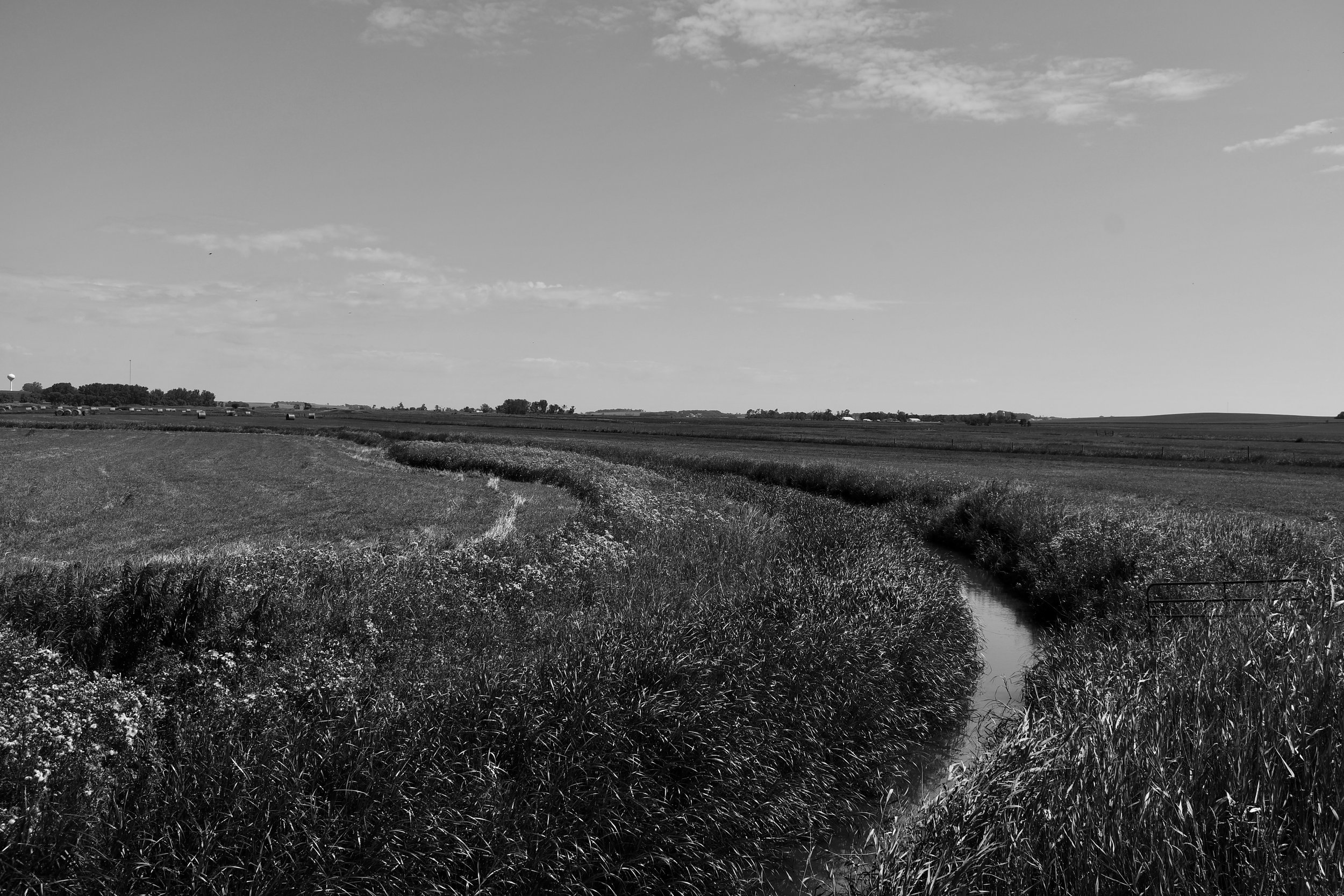
River Restoration
At Friends of the Big Sioux River, we are strong advocates for riparian buffer strips. Not only do riparian buffers help to protect downstream waterways, but when coupled with appropriate upland treatments, buffer strips can assist producers in achieving a measure of increased economic and environmental sustainability in their operations.
Current Buffer Strip Programs in South Dakota
-
A program of the South Dakota Department of Agriculture and Natural Resources (DANR), the Riparian Buffer Initiative offers annual cash payments and tax breaks to incentivize the use of buffers on private lands in impaired watersheds.
Requirements include:
A buffer of at minimum 50 ft and not to exceed 120 ft.
Vegetation may not be harvested or mowed between May 1st and August 1st.
Vegetation may not be grazed between May 1st and September 30th.
A minimum of four inches of cover must be maintained.
Landowners must commit to a ten-year contract.
Payments are based on 250% of the USDA “Pasture or Non-Irrigated Cropland Cash Rent Paid Per Acre for South Dakota” publications and will vary depending on location.
A onetime upfront payment will be made per acre for eligible acres. In addition, participants qualify for cost-share on exclusion fence, alternative water, and grass seed expenses.
Click here for more information from SD DANR.
-
Through the South Dakota Big Sioux River Watershed CREP, federal and state resources are made available to program participants to voluntarily enroll in CRP for 10-year to 15-year contracts. Additionally, through the program:
Cropland and marginal pastureland are restored to native grasses, shrubs, and wetlands.
Participants receive annual rental payments from both the USDA and GFP that are based on the productivity of the three predominant soils of the enrolled lands.
Participants also receive annual rental payments and incentive payments for installing specific conservation practices.
Incentive payments from GFP are added for public hunting and fishing access and watershed-specific conservation benefits.
Requirements include:
The land must be located in the Big Sioux River Watershed boundary of South Dakota and have been farmed for 4 out of 6 years from 2012-2017.
A minimum public access area requirement of 40 acres. The minimum can be achieved with just CREP acres or a combination of CREP and GFP’s Walk-In Area program.
The goals of the BSR Watershed CREP include:
Establish 1,500 acres of permanent vegetative cover adjacent to rivers and streams.
Reduce the amount of sediment, nutrients, and nitrogen entering waterbodies.
Produce an additional 71,250 pheasants annually.
Contribute an additional 15,000 ducks annually.
Open 250 40-acre blocks to public hunting and fishing.
Create 25,000 acres of permanent vegetative cover by restoring wetlands and grasslands.
Click here for more information from SD GFP.
-
A program by the Big Sioux River Project, RAM offers a 10- or 15-year contract to landowners who meet the eligibility requirements and are willing to adopt the following practices:
Pasture acres along the BSRP priority water bodies, within the 100-year floodplain.
30-foot buffer minimum.
No grazing is allowed.
Haying is allowed once per year between June 15th and August 31st.
Noxious weeds and other non-desirable species must be controlled.
Funding is available for landowners who enroll in RAM. For the most up-to-date pricing information, visit www.bigsiouxriver.com.
-
A program by the Big Sioux River Project, SRAM offers a 10- or 15-year contract to landowners who meet the eligibility requirements and are willing to adopt the following practices:
Pasture acres along the BSRP priority water bodies, within the 100-year floodplain.
30-foot buffer minimum.
No grazing is allowed April 1st through September 30th.
Haying is allowed beginning June 15th.
Grazing is allowed October 1st through March 31st.
An alternative water source shall be available.
Minimum vegetative stand of 4-6 inches maintained at all times.
Funding is available for landowners who enroll in SRAM. For the most up-to-date pricing information, visit www.bigsiouxriver.com.
Click on the button below to view a high-level overview of program considerations for popular riparian area buffer programs. Please contact the program’s sponsoring agency for more information and eligibility requirements. Thank you to the Big Sioux River Project for creating this handout.
What Are Riparian Buffer Strips?
Riparian buffers—also called filter strips—are vegetated boundaries composed of perennial grasses or woody plants that physically separate cropland from waterways. They effectively mitigate the movement of sediment, nutrients, and pesticides from waterways and farm fields. Width plays a factor when it comes to buffer strips. Narrow buffers are less effective filters than wider ones. Fifty-foot buffers are considered good; less than 50 feet is less than desirable. Broad 150-foot buffers are deemed exemplary.
Native grasslands and prairie wetlands have historically provided natural filtration and treatment before soil runoff drains into lakes, rivers, and streams. As more acres of native grasslands are plowed, or wetlands drained to make room for more planted acres, the integrity of water in lakes, rivers, and streams has become increasingly compromised by chemicals and eroding topsoil associated with ever-intensifying industrial agriculture.
Primary Functions of Buffer Strips
Reduce the speed of water running off fields toward waterways
Trap and filter sediment and chemicals carried by runoff
Prevent pollution from reaching water resources
Provide additional habitat for desirable plants and animals, such as pheasants, and promote healthy aquatic life
Land Along Skunk Creek Before and After Buffer Strip Implementation


Photos courtesy of the Big Sioux River Project
Benefits of Buffer Strips
Researchers have verified that grassy buffers most effectively trap particulate pollutants such as eroded soils. One study prepared for the U.S. Department of Agriculture identified the sediment-trapping capabilities of buffers as ranging from 41 percent to 100 percent, depending on the width of the buffer.

Financial
There are financial incentives for installing buffers through the Riparian Buffer Initiative and the Big Sioux River Project.

Livestock
Buffer strips protect livestock from harsh weather and, under the right management system, can provide forage for livestock.

Water Quality
Buffer strips trap and filter sediment and chemicals carried by runoff, improving water quality in nearby waterbodies.

Appearance
Like the trim on a house, well-planned conservation buffers improve the appearance of a farm or ranch.

Flooding
Buffer strips improve profitability by reducing inputs on non-crop-yielding acres, particularly those that flood frequently.

Habitat
Contiguous buffers, stretching long distances, can serve as increased habitat and safe travel corridors for wildlife.
Profitability of Buffer Strips
Areas with already low-yielding acres are a great place to integrate buffer strips and perennial vegetation. If a landowner targets areas with low economic return but high conservation value, they can reduce input costs while gaining environmental benefits.
On average, about 20% of nitrogen fertilizer is lost through surface runoff or leaching into groundwater. Approximately 135-150 pounds of nitrogen fertilizer are used per acre. Nitrogen fertilizer (urea and anhydrous) costs, on average, $0.44/lb. By implementing riparian buffer strips, which reduce fertilizer loss, a farmer can potentially save $11.88-$13.20/acre on fertilizer costs. According to Iowa State University, research shows that converting just 10% of crop-field to native perennial vegetation will reduce erosion from fields by up to 95% and reduce total phosphorus and nitrogen loss by up to 90%.
Farmers can also save money by removing cattle from streams. Cattle with unrestricted access to clean water from an alternative source, such as rural water, have been found to gain up to 23% more weight than those who drink from a contaminated pond or stream. Additionally, cattle with clean water spend more time grazing, have increased milk production, and decreased illness. Not only will the farmer have larger cattle to sell, but they may also see reduced vet bills.
When erosion and nutrient loss are reduced, farmers can save money on fertilizer and other costs associated with decreased soil health. While the economic benefits of these practices may not be seen in the first few years following practice introduction, over time, these benefits will compound and lead to increased economic and environmental health. It is a win-win situation for all species involved.
*All prices as of 2019
Damage Reversal & Associated Costs
There are several methods and practices landowners can introduce to their land to reverse the damage caused by runoff and erosion. When coupled together, these practices can increase economic and environmental sustainability. Additionally, many of these practices have cost-share opportunities available.

Planting Trees and Shrubs
Trees provide many benefits for streambank communities, including stabilizing the bank and providing habitat and food for wildlife. In Virginia, one landowner was able to reduce E. coli levels by 30.6% in half a mile of stream by removing cattle from the river and planting trees and shrubs. A study in Pennsylvania found that a stream flowing through forested buffers is 2-8 times more capable of processing in-stream nitrogen pollution than a stream without buffers.
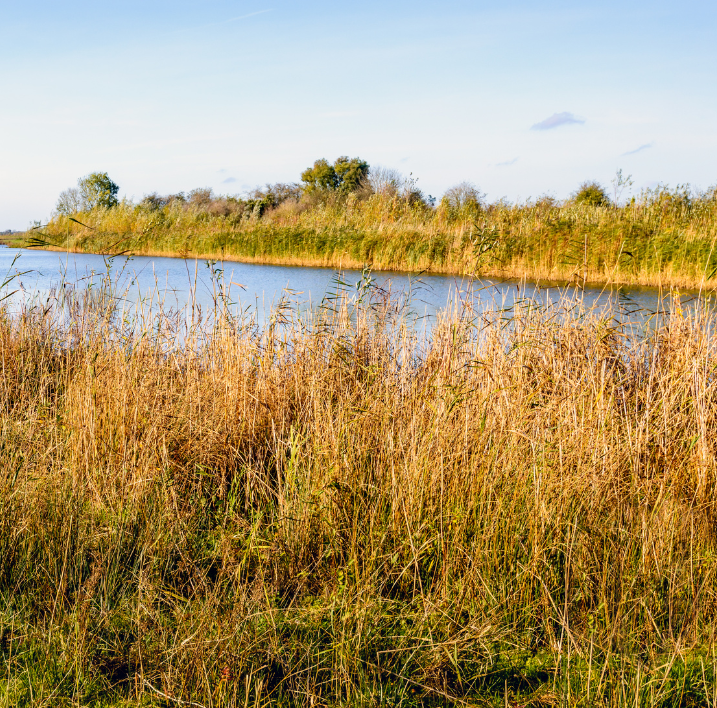
Vegetative plantings, e.g., buffer strips, are used to stabilize streambanks, reduce sediment and nutrient loads, and improve habitat for aquatic and grassland species. Buffer strips are particularly cost-effective to implement on poor-yielding acres that are often subject to flooding and erosion. By converting these marginal acres to buffer strips, a producer can reduce inputs and recoup money through programs such as SRAM or CREP.
Native Grass Buffer Strip: $235 / acre
Pollinator Buffer Strip: $1,035 / acre
Riparian Buffer Strip

Cover Crops & No-Tillage
Immediately following the harvest of a row crop, a farmer may plant a cover crop, such as a small grain, legume, or grass. When managed properly, cover crops improve soil health, promote water infiltration, reduce runoff and erosion, limit pest and disease outbreaks, and provide additional biomass and ground cover for fields.
Reduced tillage or no-tillage practices can also be used in conjunction with cover crops to reduce runoff and erosion. This practice improves soil structure, which allows water to penetrate deeper into the soil rather than ponding and running off. When combined, these practices help keep soil and fertilizer on the land and out of rivers and streams.
Basic Cover Crop: $30-$40 / acre
Multiple Species Cover Crop: $40-$45 / acre
Over-Wintering Cover Crop: $25-$40 / acre