Water Basics
What Are Water Basics?
Water basics encompass essential knowledge about water, enhancing our understanding of its properties and the systems it interacts with. When we understand where water comes from, how it interacts with the landscape, and the policies in place to protect it, we can better understand and appreciate its importance. Water is the foundation of life, and understanding water can help us better understand ourselves and the world around us.
The Water Cycle
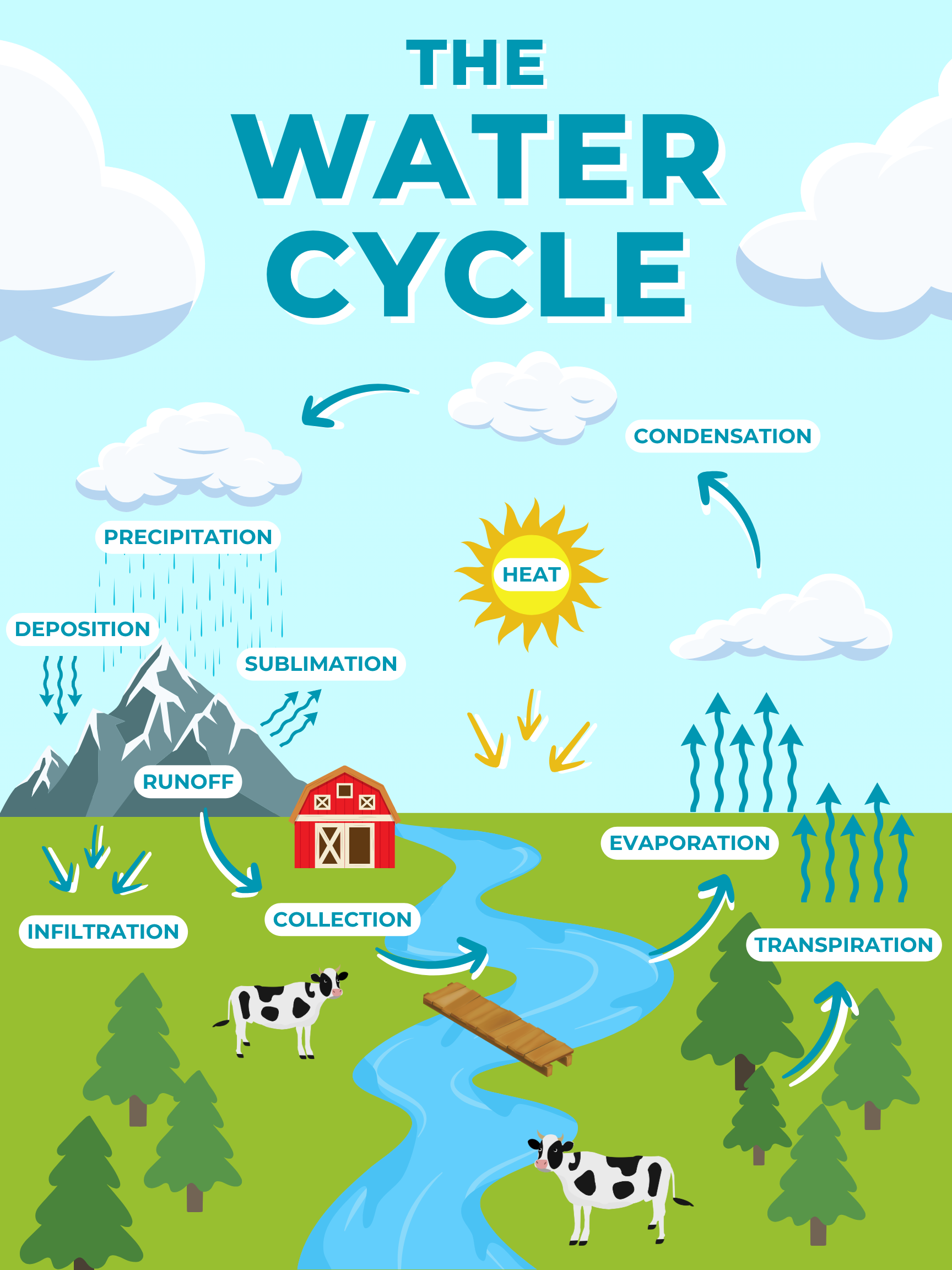
The water cycle is the continuous movement of water on, above, and below the Earth's surface. It involves several key processes that transfer water through liquid, solid, and gas forms. This cycle is crucial for maintaining Earth's ecosystems, regulating climate, and providing an essential resource for all living organisms.
-
Evaporation is the process by which water from oceans, lakes, rivers, and other waterbodies turns into water vapor. This process occurs when energy from the sun forces the bonds that hold water molecules together to break, causing them to become a gas. An example of evaporation is a puddle drying up after the sun comes out following a rainstorm. Approximately 90% of water vapor in our atmosphere comes from evaporation.
-
Transpiration is the process by which liquid water evaporates from the leaves of plants. After a plant's roots uptake water from the soil, the water moves through the plant's tissues before being released as water vapor into the atmosphere. Approximately 10% of water vapor in our atmosphere comes from transpiration.
-
Condensation is the process by which water vapor turns into water droplets. As water vapor rises into the atmosphere and cools, it condenses, forming small droplets of water that turn into clouds. Condensation also occurs at ground level, resulting in the formation of fog and dew. An example of condensation is the appearance of water droplets on the outside of a cold soda can.
-
Sublimation is the process by which snow or ice turns directly into water vapor without going through the liquid melting phase.
-
Deposition is the process by which water vapor directly turns into ice without passing through the condensation phase, resulting in a phenomenon such as hoar frost.
-
Precipitation occurs when water droplets in clouds combine and grow heavy enough to fall back to Earth as rain, snow, sleet, or hail. The type of precipitation depends on the temperature of the cloud and the temperature of the air between the cloud and the ground.
-
Runoff is water that flows over the land's surface. Runoff often occurs after a precipitation event when water begins to move downhill or towards an area of lower elevation. Eventually, runoff will either seep into the ground or flow into a body of water, such as a stream, river, lake, or ocean. Surface runoff often increases in urban areas, where paved surfaces and buildings prevent water from infiltrating the ground.
-
Infiltration occurs when water soaks into the soil from the above-ground surface. Percolation occurs when infiltrated water seeps deeper through layers of soil and rock into groundwater and aquifers.
-
When water is not actively moving through the water cycle, it is stored in the atmosphere, on the ground's surface, or underground. Depending on the location, water may be stored as water vapor, liquid water, ice, or snow. Examples of water storage reservoirs include oceans, lakes, glaciers, aquifers, and rivers.
Water FAQs
What is a Watershed?
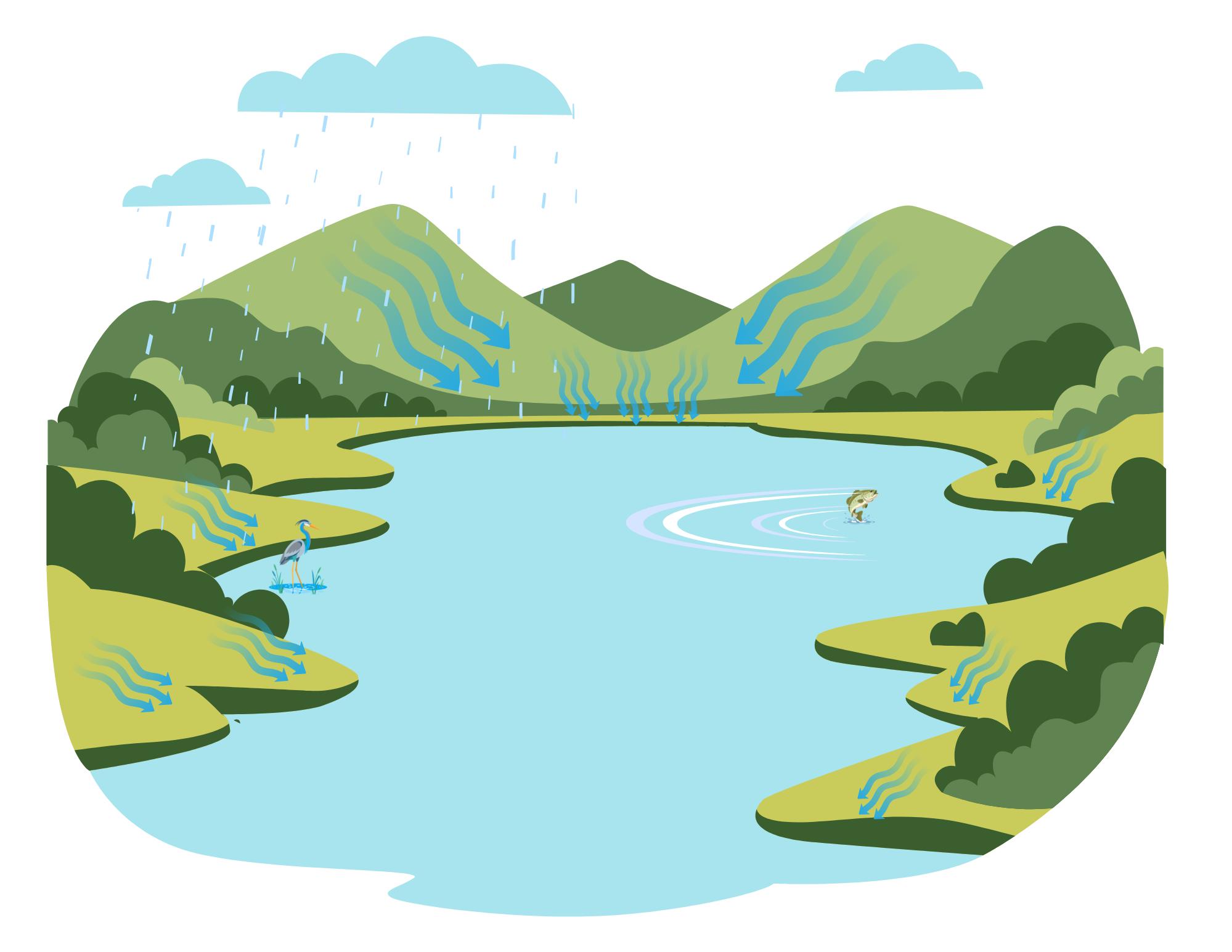
A watershed is an area of land that acts like a giant funnel. Rain, snow, and surface water flow into bodies of water, such as lakes and rivers, because of the land's topography. Natural high points and low points on the Earth lead to the collection of water.
We are located in a 9,000-square-mile land area called the Big Sioux River watershed. Precipitation and surface water drain into the Big Sioux River, which is why it's important to keep the land clear of pollution and plant native plants to prevent runoff into our waterbodies.
What is the Clean Water Act?
Originally titled the Federal Water Pollution Control Act, this law was first enacted in 1948, completely rewritten in 1972, and additionally amended by the Clean Water Act of 1977 and the Water Quality Act of 1987. The CWA is the primary federal law governing water pollution with the objective of restoring and maintaining the chemical, physical, and biological integrity of U.S. waters. The law targets point source and non-point source pollution, manages wastewater treatment, and protects wetlands. More information is available on the EPA website.
2022 marked the 50th anniversary of the Clean Water Act. Click here to learn more about the history of the CWA and to see the pollution impairment levels of U.S. waters 50 years later.
River, Lake, or Creek — What’s the Difference?
The term "stream" describes any body of flowing water. For example, both rivers and creeks are considered streams. Lakes, rivers, and creeks are more distinguishable from each other based on size and flow.
Lakes
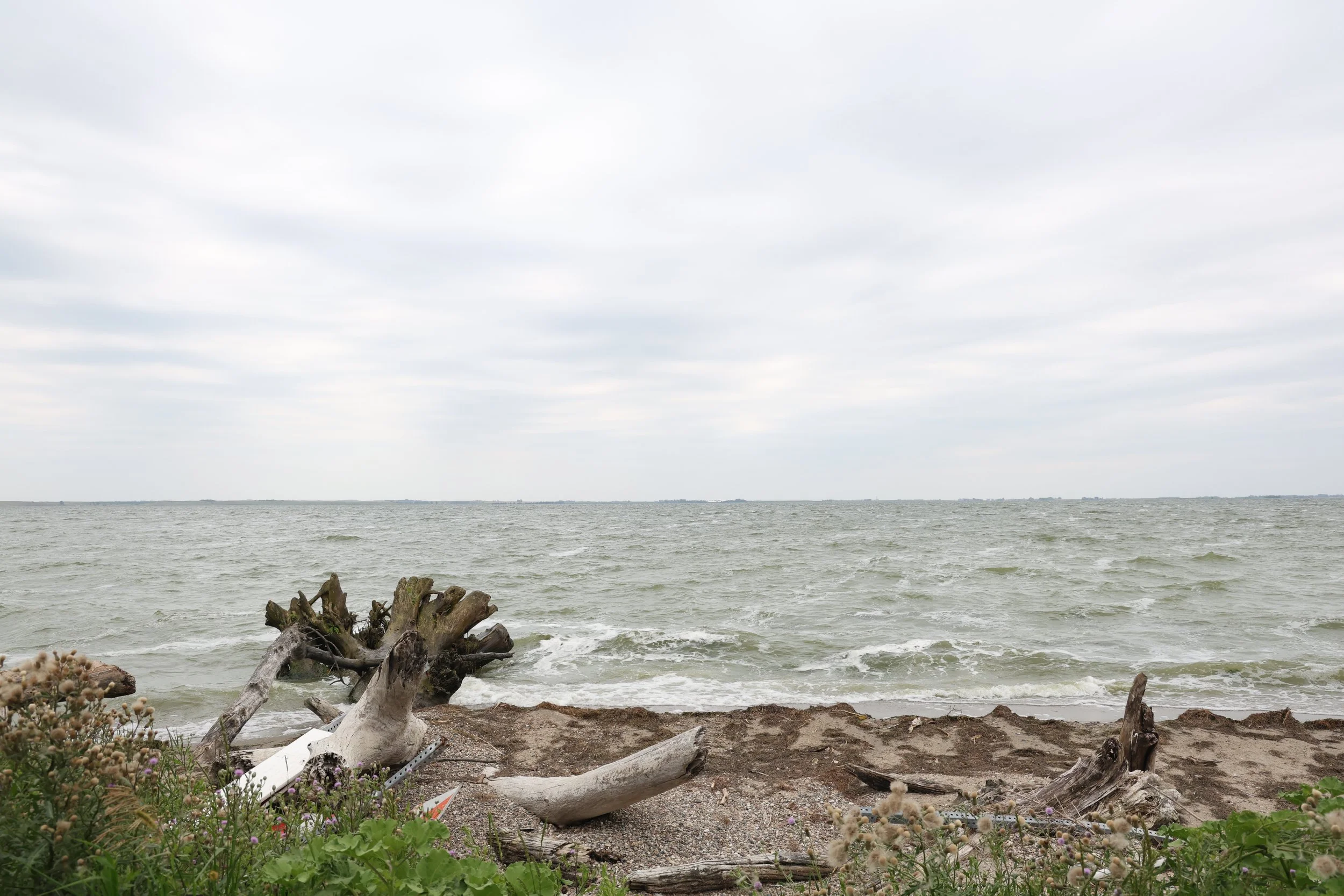
Lakes are bodies of water surrounded by land. A hollow basin collects water that remains there for long periods of time. Lake water is slow-moving and often forms layers due to density and depth.
Rivers
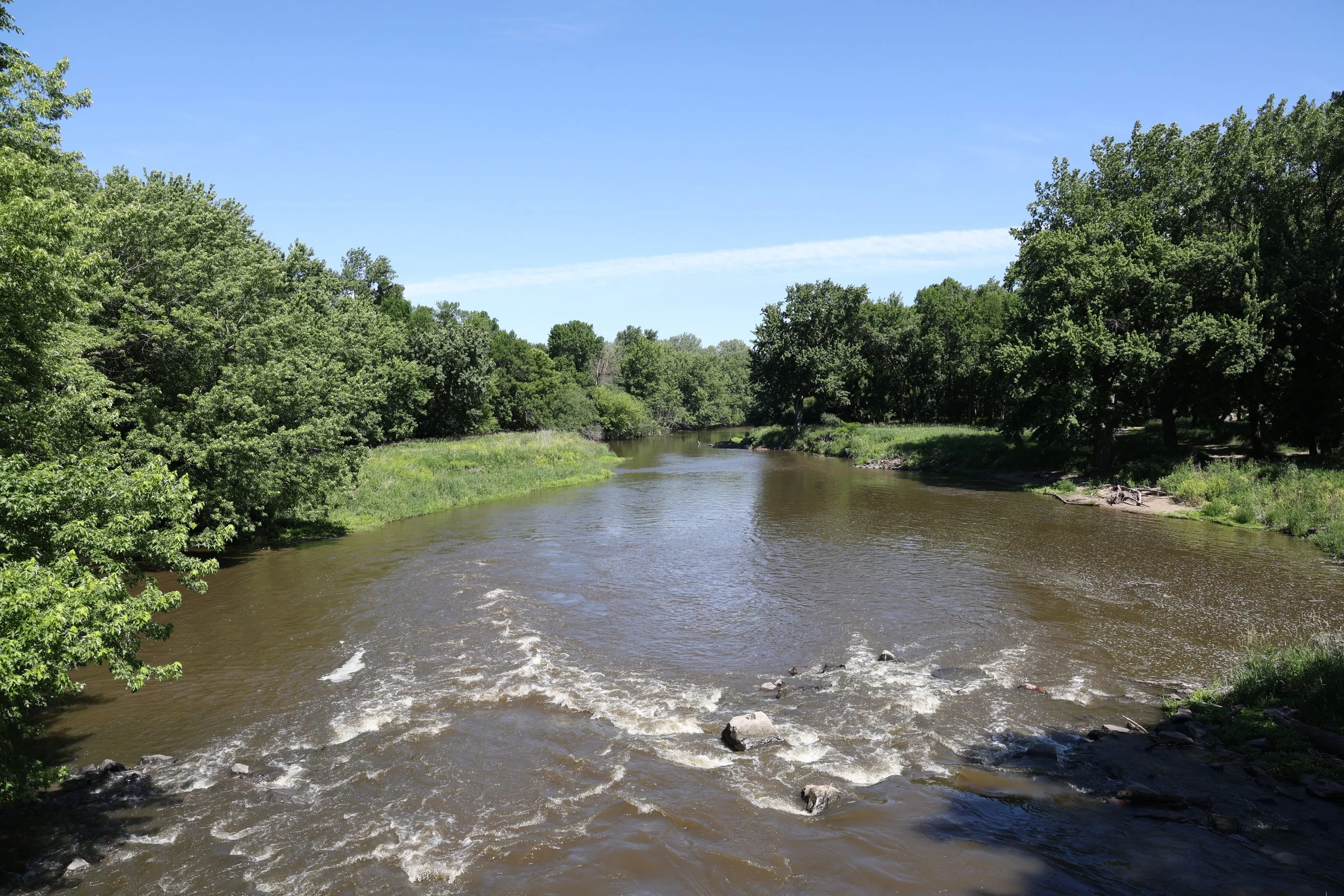
Rivers are natural bodies of flowing water that flow from higher ground to lower ground. Rivers are usually large and continuous, though there is no specific size requirement.
Creeks
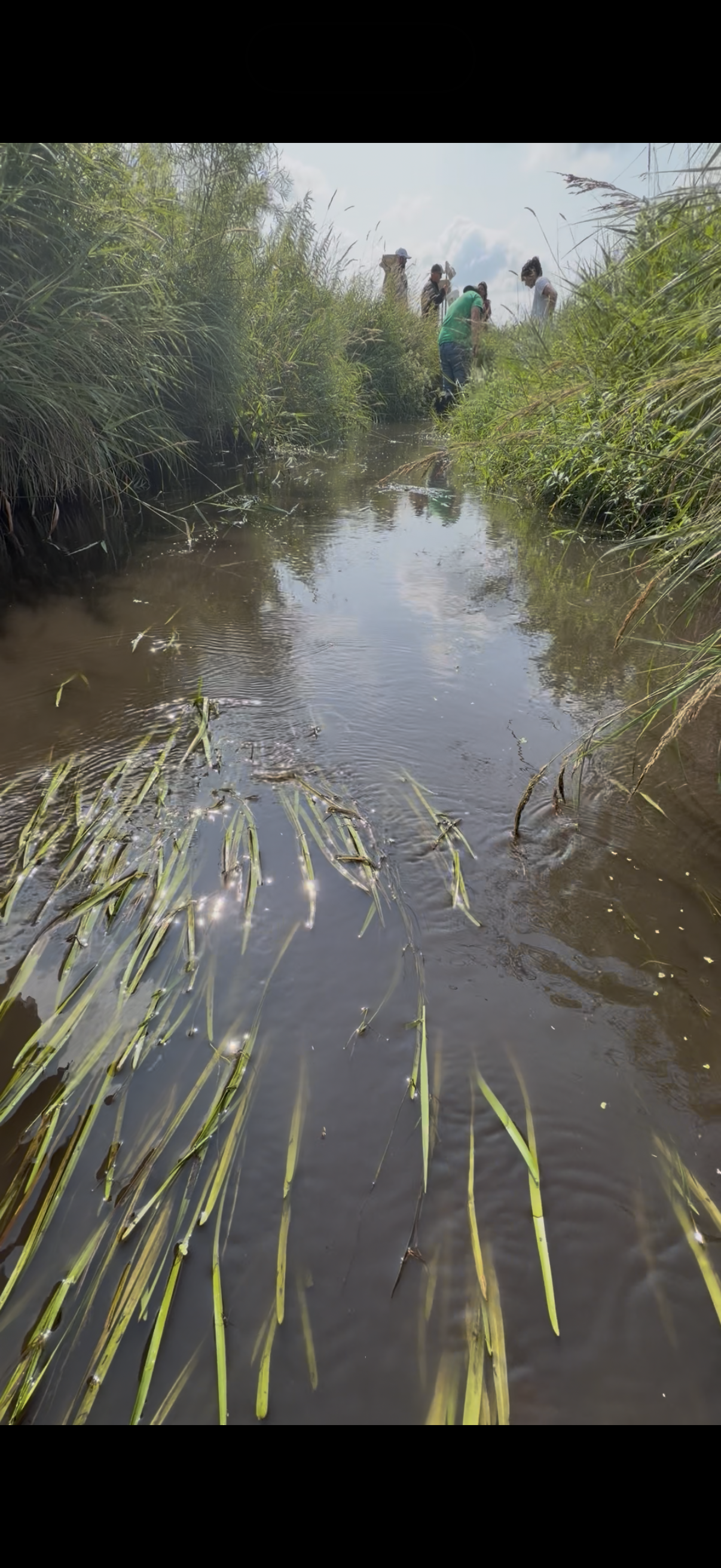
Creeks are smaller than rivers and larger than brooks. They are often tributaries of larger rivers. Creeks are usually shallow enough to walk across because the water flows gently.
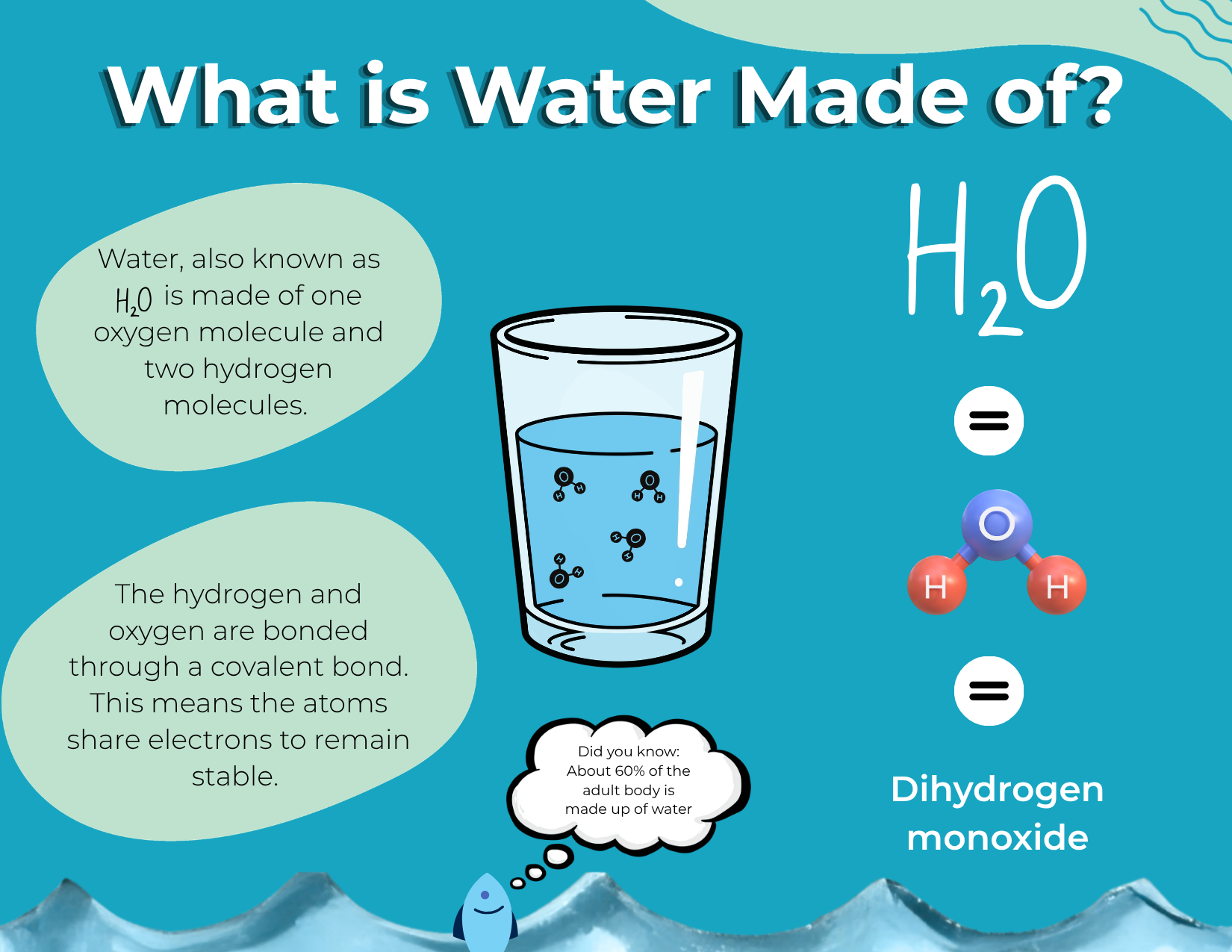
What Is Water Made Of?